PREVIOUS PROJECTS
2006
HOME BASE
126 GREENPOINT AVE
Curated by Anat Litwin, Peter Dudek & David Gibson
Featuring Diane Apostolacus, Marcy Brafman
Peter Dudek, Merav Ezer, Robert Grant, Anat Litwin
Raffael Lomas, Arik Miranda, Mark Power, Shiri Sandler
Emily Silver, Monika Sosnowski, Joshua Strauss
Shirley Wegner
Part of collaborative curatorial project originated by Anat Litwin focusing on themes of nostgalia, domesticity, and origin. Article Projects organized Room #1 with Diane Apostolacus, Marcy Brafman, Robert Grant, and Mark Power.
Rooms 2-6, curated by Anat Litwin, with work by Peter Dudek, Merav Ezer, Anat Litwin, Raffael Lomas, Arik Miranda, Shiri Sandler, Emily Silver, Monika Sosnowski, Joshua Strauss, and Shirley Wegner
 DIANE APOSTOLACUS
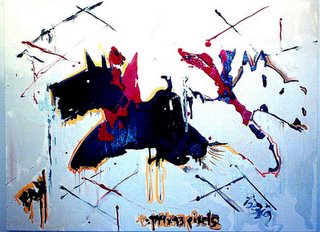 MARCY BRAFMAN
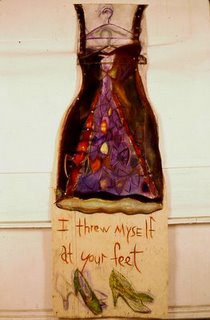 ROBERT GRANT
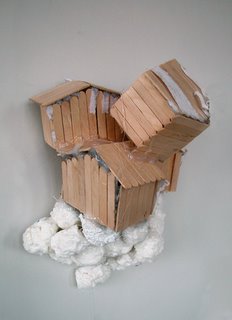 MARK POWER
HOME BASE
126 GREENPOINT AVE
Curated by Anat Litwin, Peter Dudek & David Gibson
Featuring Diane Apostolacus, Marcy Brafman
Peter Dudek, Merav Ezer, Robert Grant, Anat Litwin
Raffael Lomas, Arik Miranda, Mark Power, Shiri Sandler
Emily Silver, Monika Sosnowski, Joshua Strauss
Shirley Wegner
Part of collaborative curatorial project originated by Anat Litwin focusing on themes of nostgalia, domesticity, and origin. Article Projects organized Room #1 with Diane Apostolacus, Marcy Brafman, Robert Grant, and Mark Power.
Rooms 2-6, curated by Anat Litwin, with work by Peter Dudek, Merav Ezer, Anat Litwin, Raffael Lomas, Arik Miranda, Shiri Sandler, Emily Silver, Monika Sosnowski, Joshua Strauss, and Shirley Wegner
I would like to ask this question: what is home? Home is everything that’s familiar to us, the many little things that arrange themselves in the order of our daily experience, which define the state of domestic bliss, that color our first encounters with life in the family abode, and which we remember just as much as the more dramatic events that shape our emotional growth, even though we are apt to take them for granted.
Such encounters are more often than not extremely commonplace, but they reflect the texture of empirical knowledge: that household objects have a given resonance beyond their mere use; that brand names are ornamentations on the unconscious; that places like a bathtub basin or a shiny kitchen countertop are arenas waiting for dramas to unfold; and that the personas of parents are imprinted in the clothes they wore.
All of these experiences lead us to a place that is alternately warm and inviting while also mysterious and foreboding. The same home that we remember to a degree matching nostalgia can also be filled with somberness and menace, the same objects and images can also remind us of the horror a child feels when things are not as they should be; and what we feel as adults when we are forced to put away childish things.
The home becomes a shell of its former memory. We replace old memories with new ones, old dishes and brand names with new ones, and the past fades away like an old photograph.
Here we have art about the home, and though it is new we are older and wiser for seeing in it a semblance of our past lives. We still make use of the same items today, and random memories return to us when we see an older woman in the street, the picture of a lost relative, or we see someone eating a candy bar with a wrapper of a certain color, and we remember what it meant as a child, to feel alive.
Home is a past filled with memories that can only grow into a better future.
Such encounters are more often than not extremely commonplace, but they reflect the texture of empirical knowledge: that household objects have a given resonance beyond their mere use; that brand names are ornamentations on the unconscious; that places like a bathtub basin or a shiny kitchen countertop are arenas waiting for dramas to unfold; and that the personas of parents are imprinted in the clothes they wore.
All of these experiences lead us to a place that is alternately warm and inviting while also mysterious and foreboding. The same home that we remember to a degree matching nostalgia can also be filled with somberness and menace, the same objects and images can also remind us of the horror a child feels when things are not as they should be; and what we feel as adults when we are forced to put away childish things.
The home becomes a shell of its former memory. We replace old memories with new ones, old dishes and brand names with new ones, and the past fades away like an old photograph.
Here we have art about the home, and though it is new we are older and wiser for seeing in it a semblance of our past lives. We still make use of the same items today, and random memories return to us when we see an older woman in the street, the picture of a lost relative, or we see someone eating a candy bar with a wrapper of a certain color, and we remember what it meant as a child, to feel alive.
Home is a past filled with memories that can only grow into a better future.
 DIANE APOSTOLACUS
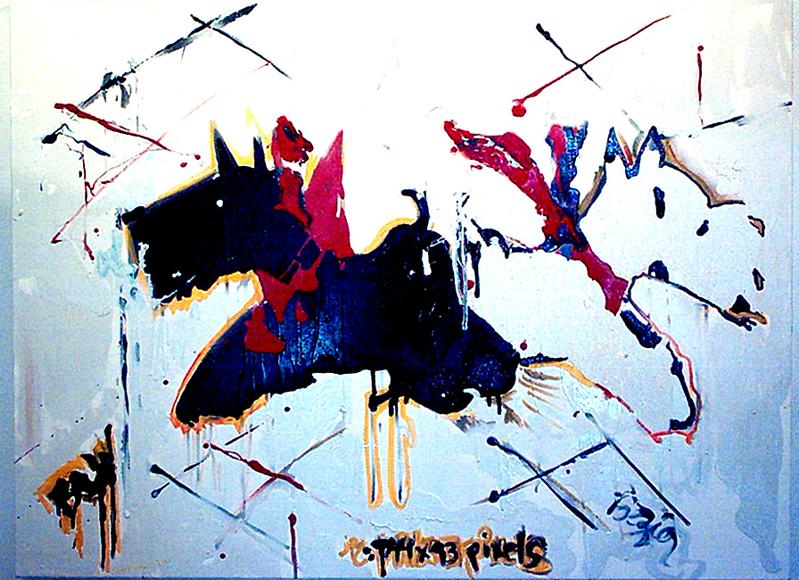 MARCY BRAFMAN
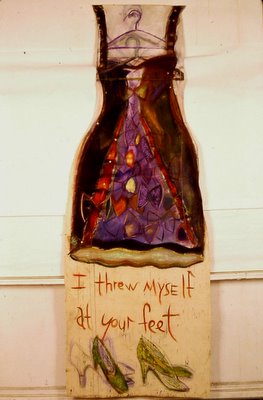 ROBERT GRANT
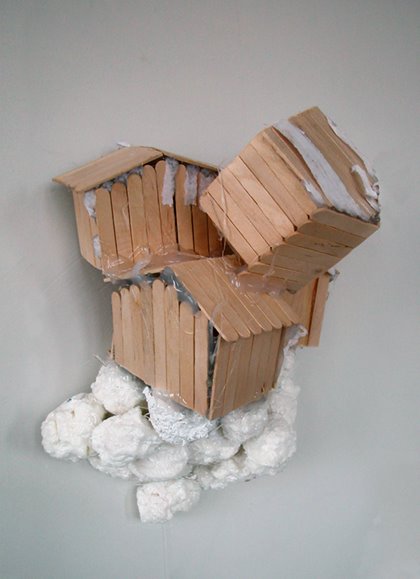 MARK POWER
I would like to ask this question: what is home? Home is everything that’s familiar to us, the many little things that arrange themselves in the order of our daily experience, which define the state of domestic bliss, that color our first encounters with life in the family abode, and which we remember just as much as the more dramatic events that shape our emotional growth, even though we are apt to take them for granted.
Such encounters are more often than not extremely commonplace, but they reflect the texture of empirical knowledge: that household objects have a given resonance beyond their mere use; that brand names are ornamentations on the unconscious; that places like a bathtub basin or a shiny kitchen countertop are arenas waiting for dramas to unfold; and that the personas of parents are imprinted in the clothes they wore.
All of these experiences lead us to a place that is alternately warm and inviting while also mysterious and foreboding. The same home that we remember to a degree matching nostalgia can also be filled with somberness and menace, the same objects and images can also remind us of the horror a child feels when things are not as they should be; and what we feel as adults when we are forced to put away childish things.
The home becomes a shell of its former memory. We replace old memories with new ones, old dishes and brand names with new ones, and the past fades away like an old photograph.
Here we have art about the home, and though it is new we are older and wiser for seeing in it a semblance of our past lives. We still make use of the same items today, and random memories return to us when we see an older woman in the street, the picture of a lost relative, or we see someone eating a candy bar with a wrapper of a certain color, and we remember what it meant as a child, to feel alive.
Home is a past filled with memories that can only grow into a better future.
Such encounters are more often than not extremely commonplace, but they reflect the texture of empirical knowledge: that household objects have a given resonance beyond their mere use; that brand names are ornamentations on the unconscious; that places like a bathtub basin or a shiny kitchen countertop are arenas waiting for dramas to unfold; and that the personas of parents are imprinted in the clothes they wore.
All of these experiences lead us to a place that is alternately warm and inviting while also mysterious and foreboding. The same home that we remember to a degree matching nostalgia can also be filled with somberness and menace, the same objects and images can also remind us of the horror a child feels when things are not as they should be; and what we feel as adults when we are forced to put away childish things.
The home becomes a shell of its former memory. We replace old memories with new ones, old dishes and brand names with new ones, and the past fades away like an old photograph.
Here we have art about the home, and though it is new we are older and wiser for seeing in it a semblance of our past lives. We still make use of the same items today, and random memories return to us when we see an older woman in the street, the picture of a lost relative, or we see someone eating a candy bar with a wrapper of a certain color, and we remember what it meant as a child, to feel alive.
Home is a past filled with memories that can only grow into a better future.

GAE SAVANNAH: A FOOL AND HIS FROTH ARE SOON PARTED at Dam Stuhltrager Gallery, 38 Marcy Avenue, Brooklyn, New York, January 7-February 12, 2006.
Gae Savannah is a contemporary sculptor whose subject is the idiosyncratic face of beauty in a world where there are no moral absolutes. She builds works which are on their face lush and sumptuous, totemic forms that are the product of commercially manufactured textiles, decorative beads, feathers, even Christmas ornaments. They are monuments to the joy in building a complex and ambivalent impression, as is often present in fanciful scenes of natural beauty, in the emotional reaction one has to the presence of a loved one, or to an emotion that is as new, and therefore relevant, as the event which determines it. For Savannah the intellect and the senses are on equal footing. Her sculptures are lovingly and obsessively constructed. They possess a lush dynamic which combines aesthetic fascination and ironic ridicule--in what amounts to a foolishness of intention, a love of kitsch and a value for materials that are on their face fashionable and even trite. Totemic they are, and symbolic of a belief in beauty that is infinite yet also ambivalent. They are not perfect monuments, morally and conceptually pure, but are constructed from a variety of sensate impressions that connect directly with the transience of fashion and its tangent to the psychology of ornament. Each section of a single sculptural work is either purchased or decorated before the process of sampling and building commences to create the works as sculptural wholes. They are stacked and stuffed, embroidered and incandescent, vertical and layered. She wants to communicate the quality inspiration that originates in the difference between--and esthetic marriage of--a mysterious emotional interior and a glorious and sublime exterior. Finally, Savannah wants to fascinate the viewer with a multitude of sensations, to make them think about her works as products of a foolish consistency that has left them with many meanings instead of just one.
_________________________________________________________2005
 PHOTO NEW YORK 2005, collaboration with Creative Thriftshop, The Metropolitan Pavilion, Booth 18, 125 West 18th Street, New York, October 6-9, 2005
BEAUTIFUL DREAMER, Spaces Inc., Cleveland, Ohio, September 9–October 23, 2005
 EVERLAND, Annina Nosei Gallery, 530 West 22nd Street, New York, June 10-July 23, 2005
NURTURING THE NEW 2005, Benefit Exhibition, Spike Gallery, New York, June 6, 2005.
 CULTURE VULTURE, Jack The Pelican Presents, 487 Driggs Avenue, Brooklyn, New York, April 1–May 1, 2005
 LOST IN PLACE, Planet Thai, 177 North 7th Street, Brooklyn, New York, January 12–March 27, 2005
2004
 INTIMACY, Brooklyn Fireproof, 101 Richardson Street, Brooklyn, New York, September 23–October 24, 2004
  DIANA SHPUNGIN & NICOLE ENGELMANN: SECOND GENERATION EGO, Central Gallery, University of Massachusetts, Amherst, MA. September 16–October 14, 2004
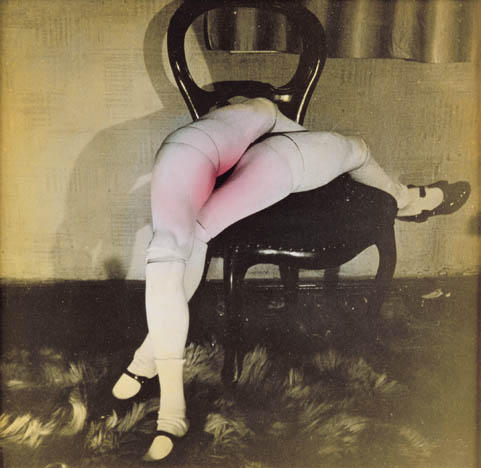 BEAUTIFUL GROTESQUE curated with Anjali Suneja. Riva Gallery, 529 West 20th Street, New York. June 24-July 31, 2004
BEAUTIFUL GROTESQUE curated with Anjali Suneja
JUNE 24 – JULY 31, 2004
Opening reception: Thursday, June 24, 6-9 pm.
Reed Anderson, Hans Bellmer, Jeanne Dunning, Philip Guston, Mike Kelley, Tony Matelli, David Nicholson, Leemour Pelli, Andres Serrano, Cindy Sherman, Rotem Tashach, Ginna Triplett, Joel-Peter Witkin
This exhibition is about the ambivalent nature of desire, and addresses a common fascination with the range of psychological associations attached to the body, complicated by the theme of otherness. This involves both our acceptance of mundane physical appearance versus another as yet unheralded presence, a dream body, through which we may project either an idealistic or a depraved version of our own self-image. Otherness occupies a world beyond sensation that is contingent to both death and decay and to a sort of totemic reality which overrides the spectator's ability to see themselves in the work of art. The degree of fascination inherent in the aesthetic event is qualified equally by the subject at hand and our ability to comprehend the overwhelming force of its idiosyncrasy.
The “Morgue” photographs of Andres Serrano present dead bodies as objects of aesthetic delectation, and though we may feel an immediate repulsion when faced with them, it is either the absence of vitality or the presence of death which affronts us, and we keep looking to see what remains to make them so compelling as images. This is also the case with “Food” by Jeanne Dunning, in which the artist presents us with an image of visceral matter that resembles intestines, but does so in such a ritualized and tender, almost elegiac manner that we are hard pressed to respond merely with disgust, but must admit that she had made them beautiful. In an image of Cindy Sherman, we are presented with a large dining table set for an elaborate meal though surrounded by a foreboding darkness. At the seat directly before us, the plate is filled with a squirming mass of fleshy earthworms. If this were our meal, clearly we would be unable to partake. But Sherman means to portray a situation in which the unconscious is tapped through reference to a powerful animistic symbol, a burrower in the deep earth, and therefore in the subconscious.
Alternately, we may be challenged by images of a symbolic nature which do not naturally reduce themselves into a logical form. Reed Anderson develops a visually complex image with multiple associations, at once connected to nightmares, mining the unconscious. While presenting its imagery as a pastiche of the fanciful and the decorative, he denies the order of perspective by creating one object as a combination of all visual events in a picture at once. Tony Matelli’s “The Wanderer” presents us with autobiography as fabulation, with the body of the artist on a quest through barren lands, accompanied by his anthropological familiars, a pack of small monkeys. Though the scene may seem mundane in detail, the manner of depiction, a life-sized golem of the artist’s own appearance, narrating an experience well beyond the bounds of his role as an artist, and therefore injects our sense of reality with an absurdity that compels us to regard it as grotesque. The same is true of Philip Guston, whose hooded figures are found driving a roll top auto on a serene day trip, the details of their humdrum existence a foil to the mystery of their identities.
The images in this exhibition incite a sensation that reaches us on a level far deeper than reason. The efficacy of their existence as art works is proof of their power over us.
Alternately, we may be challenged by images of a symbolic nature which do not naturally reduce themselves into a logical form. Reed Anderson develops a visually complex image with multiple associations, at once connected to nightmares, mining the unconscious. While presenting its imagery as a pastiche of the fanciful and the decorative, he denies the order of perspective by creating one object as a combination of all visual events in a picture at once. Tony Matelli’s “The Wanderer” presents us with autobiography as fabulation, with the body of the artist on a quest through barren lands, accompanied by his anthropological familiars, a pack of small monkeys. Though the scene may seem mundane in detail, the manner of depiction, a life-sized golem of the artist’s own appearance, narrating an experience well beyond the bounds of his role as an artist, and therefore injects our sense of reality with an absurdity that compels us to regard it as grotesque. The same is true of Philip Guston, whose hooded figures are found driving a roll top auto on a serene day trip, the details of their humdrum existence a foil to the mystery of their identities.
The images in this exhibition incite a sensation that reaches us on a level far deeper than reason. The efficacy of their existence as art works is proof of their power over us.
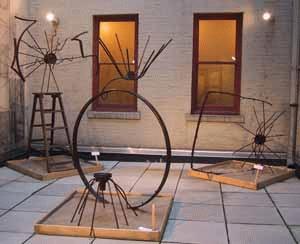 VISIONARIES curated with Anat Litwin. Makor-Steinhardt Center of the 92nd Street Y, 35 West 67th Street, New York, June 13–August 1, 2004
LEEMOUR PELLI: FROM THE HEART, Annina Sandra Bermudez, Amy Chaiklin, Chrissy Conant, Veronica Cross, Carla Gannis, Tina La Porta, Joan Linder, Norma Markley, Leemour Pelli, Catya Plate, Gae Savannah, Diana Shpungin & Nicole Engelmann, Maria Spector, Ginna Triplett, Marina Tsesarskaya, Deborah Wasserman.
Nosei Galllery, 530 West 22nd Street, New York, May 26–June 26, 2004
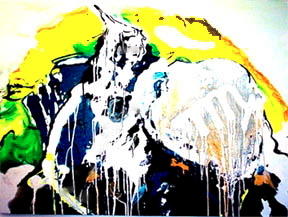 MARKET VALUE, Cuchifritos, 120 Essex Street, New York. May 15-July 26, 2004.
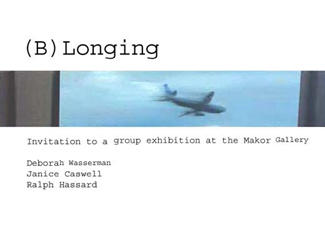 (B) LONGING curated with Anat Litwin. Makor-Steinhardt Center of the 92nd Street Y, 35 West 67th Street, New York, April 27-June 6, 2004
 VOID, Educational Alliance Gallery, 197 East Broadway, New York. Feb 5-March 20, 2004
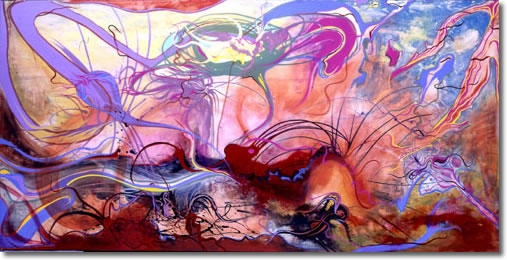 AILLINN BRENNAN: DYSTOPIAN PAINTINGS, Lifespace, Long Island City, New York, January 31-February 28, 2004
2003
 ERWIN REDL: LIGHT INSTALLATIONS & DRAWINGS, Riva Gallery, 529 West 20th Street, New York, November 21, 2003–January 7, 2004
ID_ENTITY, Nurture Art, 475 Keap Street, Brooklyn, New York. September 19-November 16, 2003
 CARTOON, Riva Gallery, 529 West 20th Street, New York. June 12–August 9, 2003
CURATORS CHOICE, Curated with Nicola Jasek Lorenz, Artists Alliance Inc, 107 Suffolk Street, Studio 410, New York. May 17-May 31, 2003
LIMINAL, University of Massachusetts at Amherst. March 27–April 30, 2003.
 PRESENCE, Scope Art Fair, The Dylan Hotel, 52 East 41st Street, New York, March 7-March 10, 2003
2002
 SOME (ARE) PAINTING II, The Educational Alliance, 197 East Broadway, New York. December 21, 2002–January 24, 2003
ANYWHERE BUT HERE Curated with Pete Lasell at MediaMerge, 450 West 41 #414, New York, November 15–December 13, 2002.
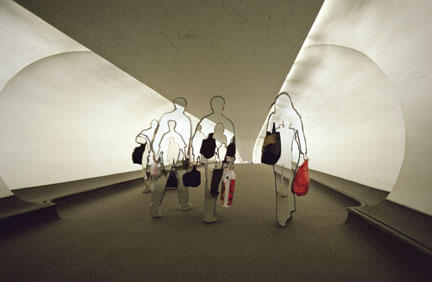 SOCIAL SPACE, Cuchifritos, 120 Essex Street, New York, October 26–November 30, 2002
OPEN VIEW, Artists Alliance, 107 Suffolk Street, New York, October 19–November 30, 2002.
BODIES & FORMS, John Eicher Studio, 68 Jay Street, Brooklyn NY, October 19-20, 2002.
EROTIKA, Riva Gallery, 529 West 20th Street, New York, July 11-Aug 10, 2002.
2001
THE BODY OR THE LANDSCAPE, Artists Alliance, 107 Rivington Street, New York, October 13-November 18, 2001.
LIMINAL, The Space @ Media Triangle, 640 Broadway, New York, September 21–October 13, 2001.
SELECTED AFFINITIES, Planet Thailand, 133 North 7th Street, Brooklyn, New York, June 18–October 18, 2001.
SOME (ARE) PAINTING, John Gibson Gallery, 568 Broadway, New York, June 9–July 21, 2001
2000
SUGAR+SPICE, The Space @ Media Triangle, 640 Broadway, New York, Nov 17–December 10, 2000.



Comments
Post a Comment